My employees are demotivated. What should I do?
How to stop managing symptoms and solve team disengagement by rebuilding your operating model for high-intent motivation.
Individual demotivation is typically a symptom of systemic issues in the operating model. The Motive Spectrum provides a diagnostic to identify where indirect motives like pressure and inertia are destroying performance. This AI-Native & People-First approach uses Culture Checks to help teams take ownership of their own dynamics and restore play, purpose, and potential.


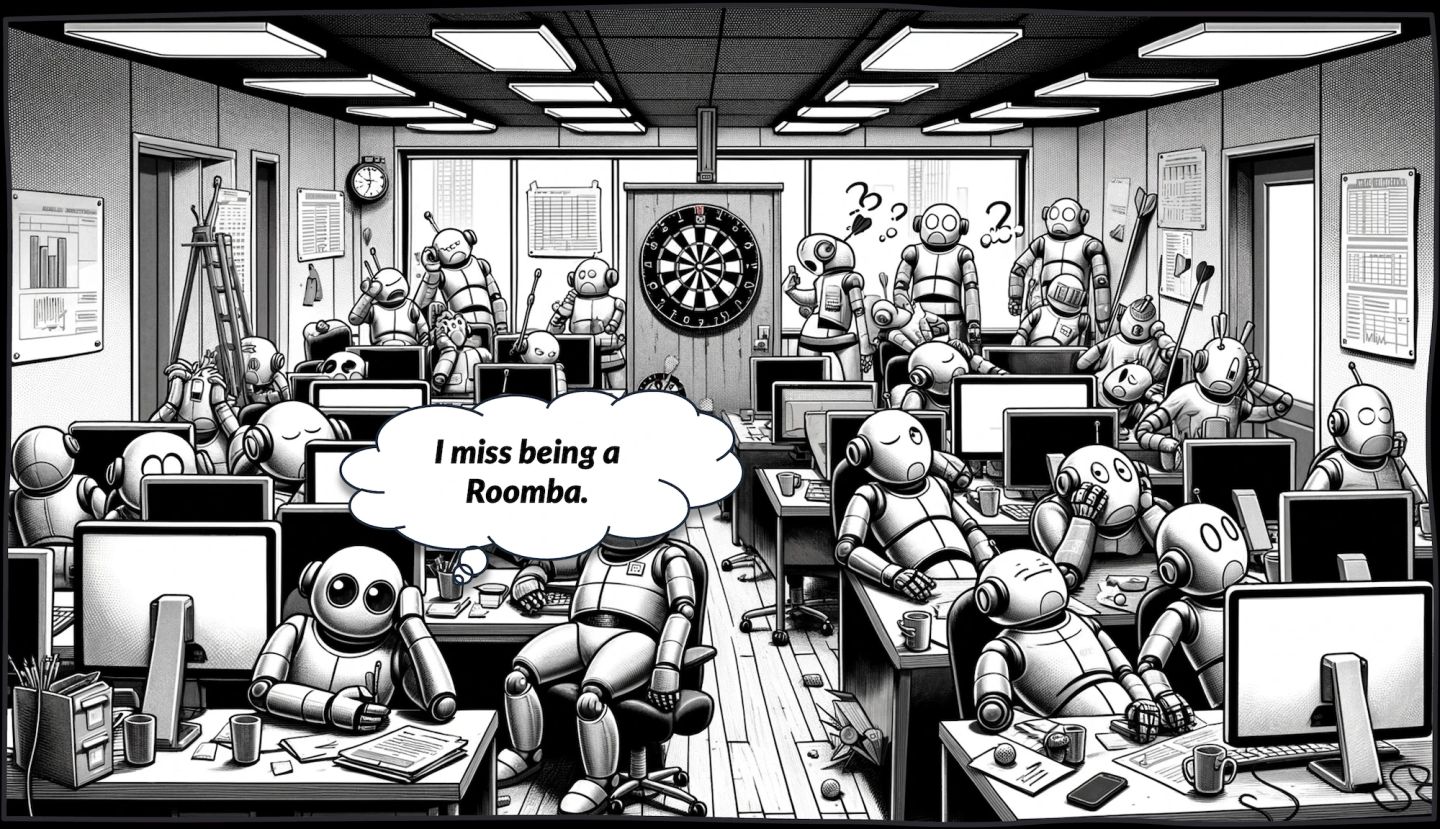
A large tech company that we're currently working with has a challenge that is unfortunately too common: demotivated employees.
They attend all the required alignment meetings. They write their business review and performance review memos. They make themselves visible in Slack. They interject crowd-pleasing questions like, "Will this scale?" or "Can we think about the customer?" They hit their deadlines or have a well-prepared story to deflect blame. But even with all of this activity, the organization is underperforming.
Unfortunately, demotivation at work is now a widespread problem. According to the polling company Gallup, only 33% of the US workforce is engaged. After decades of MBAs, leadership training, and employee surveys, the best we could achieve is 33%!
To understand this, we need to do a deep dive into how motivation works and why organizations need to mobilize all their teams to do quarterly Culture Checks to make progress on this issue.
How Motivation Drives Performance
To unpack the complex topic of motivation, let's start with a simple question: Why do you stay in your current job (versus leaving for another)? In other words, what is your motive?
The word motive is the root of motivation. It means the reason or cause that drives someone to take action.
So then, why do you stay in your current job? You could have answered this question in a number of ways:
- I really like the work I do.
- I don't want to disappoint my spouse.
- I would have a hard time getting another job.
- I really don't know.
To understand motivation, you must understand the motives beneath these reasons. A person's motivation can come from one of three sources:
- The work itself.
- The person's identity (e.g., what they value or believe).
- External forces separate from the work or the person.
When you combine these three sources, like how our eyes combine red, blue, and green light to create our visible spectrum, you get the full spectrum of human motives.
Play
I once asked one of the world's most successful hedge fund managers why he keeps trading. He said, "It's fun."
This is an example of the first direct motive, play. Play is when you do your work because it is fun and you enjoy doing it. In the image below, the motive, represented by the circle, is aligned to the work itself.

Play can be built into any job:
- If you're an accountant, maybe you enjoy figuring out complex financial issues.
- If you're a line worker in a factory, play may come from the game of finding problems and pulling the andon cord to fix them.
- If you're a software engineer, maybe you enjoy the problem-solving involved when writing code.
To be clear, play isn't about distractions like ping pong tables. Play has to come from the work itself. At work, play usually manifests as novelty, creativity, problem-solving, or invention.
Purpose
I once had an amazing barista at Starbucks who went out of her way to remember the orders of her regulars. I asked her why she does this, and she said, "If my customers feel like someone sees them, it brightens their day."
This is an example of the second direct motive, purpose. Purpose is when you do your work because you believe your specific contribution matters now. In the image below, the purpose motive straddles the line between the work and your identity.

Purpose also can be built into any job:
- If you deliver room service at a hotel, maybe you feel like you're uniquely able to make customers feel welcome.
- If you are a middle manager, maybe you feel like your everyday engagement is unlocking teams.
- If you're an orchestra musician, maybe you feel like the way you play your part directly impacts the way your audience feels.
To be clear, purpose isn't about a big mission statement or a company's purpose. The purpose motive is about the kind of personal purpose that comes from feeling like you matter. You're irreplaceable. You're not a fungible cog in the machine.
Potential
Zearn is a software company that helps children learn math. CEO Shalinee Sharma once shared with me how learning math creates an incredible life advantage for children, and how Zearn aims to create a numeracy movement, akin to the literacy movement.
This is an example of the third direct motive, potential. Potential is when you do your work because it leads to eventual outcomes that you value and care about. These eventual outcomes can be your own career growth or the broader vision of the company. However, for this to truly be your motive, you must care about these outcomes deeply. This is why, in the image below, the potential motive is more overlapping with your identity and values.

Potential can exist in any job:
- If you're a bank teller, maybe you feel like your work is contributing to your community's financial health.
- If you're a designer, maybe you feel like your designs will help your users solve their ultimate problem.
- If you're an analyst at an investment bank, maybe you feel like you're growing the skills that will lead to a career you're excited about.
Emotional Pressure
A senior product manager at a major tech company described her job as finding ways to write her OKRs to avoid triggering any one of her more senior stakeholders.
This is an example of the first indirect motive, emotional pressure. Emotional pressure is when an external force (typically the fear of judgment, blame, or shame) is manipulating you to act. Peer pressure is a textbook example of emotional pressure: a child values what their peers think of them, and the peers are the external force. This is why, in the image below, emotional pressure straddles the line between the external force and your identity.

Emotional pressure can exist in any job:
- If you are a CEO, maybe you feel like you will be judged negatively by your peers and journalists for poor short-term performance.
- If you are a consultant, maybe you feel like you will be deemed unintelligent by your leaders if you don't have something insightful to say in a meeting.
- If you are a salesperson in a not-for-profit, you might feel guilty if you quit for a higher-paying job.
Economic Pressure
We've sadly seen cases of pressure play out recently at Boeing. A work environment where people's jobs were threatened predictably caused colleagues to take shortcuts.
This is an example of the second indirect motive, economic pressure. Economic pressure, to be clear, isn't money. Instead, it is manipulation through rewards and punishments. These "sticks and carrots" are neither a part of the work itself nor your identity, so they are external forces. That's why in the diagram below, the circle representing economic pressure is now aligned with the external force.

Economic pressure can exist in any job:
- If you're a senior executive, you might feel like you're doing your job only because of golden handcuffs.
- If you're a warehouse worker, you might feel like you're only doing your job because you can't earn a living anywhere else.
- If you're a business analyst, you might feel like you're only doing your job to avoid a bad rating at the end of the year.
Inertia
A banking CEO once said to me, "I have no idea why I'm still doing this." This is a classic sign of inertia.
Inertia is the third and final indirect motive. Inertia is when you no longer know your own motive or reason for doing something. You're just doing it because you did it yesterday and the day before. This is why in the diagram below, inertia is off the page. It is the absence of all the sources of motivation.

Inertia is the most harmful to performance. When a person feels only inertia, they won't even try to work through challenges.
Combine these six motives, and you get the motive spectrum, the complete framework of motives.

When a team is driven by play, purpose, and potential, they will perform with agency, a growth mindset, and intensity. When a team is driven by emotional pressure, economic pressure, and inertia, they will feel controlled, coerced, and psychologically unsafe.
Therefore, to build a high-performing organization, you must increase the direct motives and decrease the indirect motives on all your teams. Doing the opposite will get you compliance and rule-following, but it won't get you creativity, collaborative problem-solving, ownership, growth, and adaptability.
Motivation is More Decentralized Than Centralized
MBA programs, corporate leadership programs, and employee surveys have existed for around a century. Yet not only have we achieved low levels of employee engagement, but interest in these kinds of tools is waning. Why is that?

While there are a number of root causes (e.g., societal expectations, wage growth trends, competitive dynamics, and technological changes), the easiest root cause to tackle is a misunderstanding of how to drive motivation.
Here's a simple question for you to reflect on: have you ever felt two different levels of motivation in the same company? If you're like most people, you'd say, "Yes." But you didn't change, you're the same person. And the company didn't change. It's the same company. In most cases, what changed was your local context.
- Local context is the work you do and the dynamics on your teams.
- Global context includes things like your company's performance review systems.
Look at the motives above. Play, purpose, and inertia are almost entirely driven by local context. The other motives are about 50:50. Moreover, play, purpose, and inertia are the most powerful motives with significantly higher influence on your total motivation. As a result, roughly 75% of an employee's influenceable motivation is determined by the teams that they work on, not centralized levers. This is why employees are more likely to quit because of their teams or leaders than their companies.
The tools that companies typically use to manage motivation are pointing at the wrong target. They are either pointing at overly centralized levers, or they are not developing leaders in the right skills to create performance motivation.
Culture Checks
Culture Checks are the shockingly powerful solution to this problem. The concept is simple:
First, every quarter, every team is expected to do a 90-minute Culture Check conversation where the goal as a team is to plan ways to improve themselves. This builds agency and thus motivation.
Second, in the first 10 minutes of that conversation, the team individually completes a diagnostic on how they are feeling about their work, their motivation, and their team. Colleagues can answer these questions in any of 50 different languages so they can express themselves in a way that is most comfortable to them.

Third, based on that diagnostic, the team immediately gets an AI-generated discussion guide that they use in the next 80 minutes to plan changes. That discussion guide leads them through a constructive conversation on their issues that simultaneously teaches them good problem-solving skills.

To create supportive accountability, leaders can monitor the Culture Checks of all teams easily and spot org-wide patterns.

Every quarter, companies run leadership boosters to help leaders close the very specific gaps their Culture Checks identified. As a result, leadership development shifts from theoretical to hyper-practical and apprenticeship-based.
This simple, easy-to-run, easy-to-implement cadence makes it easy for teams to improve their own motivation and for leaders to grow their skills.
Manage the Inputs of Performance
Most leaders understand that skill and will are critical inputs to performance.

Yet incredibly, few organizations manage skill or will. Today, with the challenges of hybrid work, generational shifts in work centrality, more difficult work problems to solve, and constant change, motivation is more critical than ever and more threatened than ever.
With Culture Checks, it is so easy to manage and improve motivation, there is no good reason not to. Feel free to reach out or schedule time, and we'll show you just how easy it can be.
About the authors
Lindsay McGregor
Meet Lindsay McGregor, the best-selling co-author of Primed to Perform, and co-founder of Factor.ai and Vega Factor. She's on a mission to build organizations that are AI Native & People First, because, let's be honest, who wouldn't want a world where every company thrives and everyone genuinely loves their career?
Lindsay is a hard-working nerd at heart. She holds an MBA from Harvard Business School and an undergraduate degree from Princeton University. A former McKinsey & Company consultant, she's also a New York City Library cardholder and a science fiction enthusiast.
Today, Lindsay isn't just talking about change; she's making the tools and doing the science needed to ensure everybody has great professional lives. It's safe to say, she's making work work better for everyone.
Neel Doshi
Meet Neel Doshi, the best-selling co-author of Primed to Perform, and co-founder of Factor.ai and Vega Factor. He's dedicated his career to a pretty ambitious goal: creating a future where all companies are high-performing because they're AI Native & People First. Think of it as making work so good, people actually look forward to Mondays.
Neel looks at this challenge through the eyes of an engineer. He earned his engineering degree from MIT and his MBA from the Wharton School. A former Partner at McKinsey & Company, he's also a Kentucky Colonel and a graduate of the Bronx High School of Science. Neel takes science-nerd to all new heights.
Currently, Neel is focused on showing the world that through science and AI, every team and company can be extremely motivating and high-performing. No one need be left behind in the march of progress.