Legacy performance frameworks are destroying iconic companies. Make sure yours isn't one of them.
Modernize your Operating Models to outpace volatility and avoid the decay of legacy bureaucracy.
Complex, outdated management frameworks often create more bureaucracy than value. The VEGA Loops simplifies performance management by focusing on twelve essential frameworks for organizational health. This AI-Native & People-First approach replaces legacy systems with high-frequency routines that drive both tactical consistency and adaptive growth across the entire enterprise.


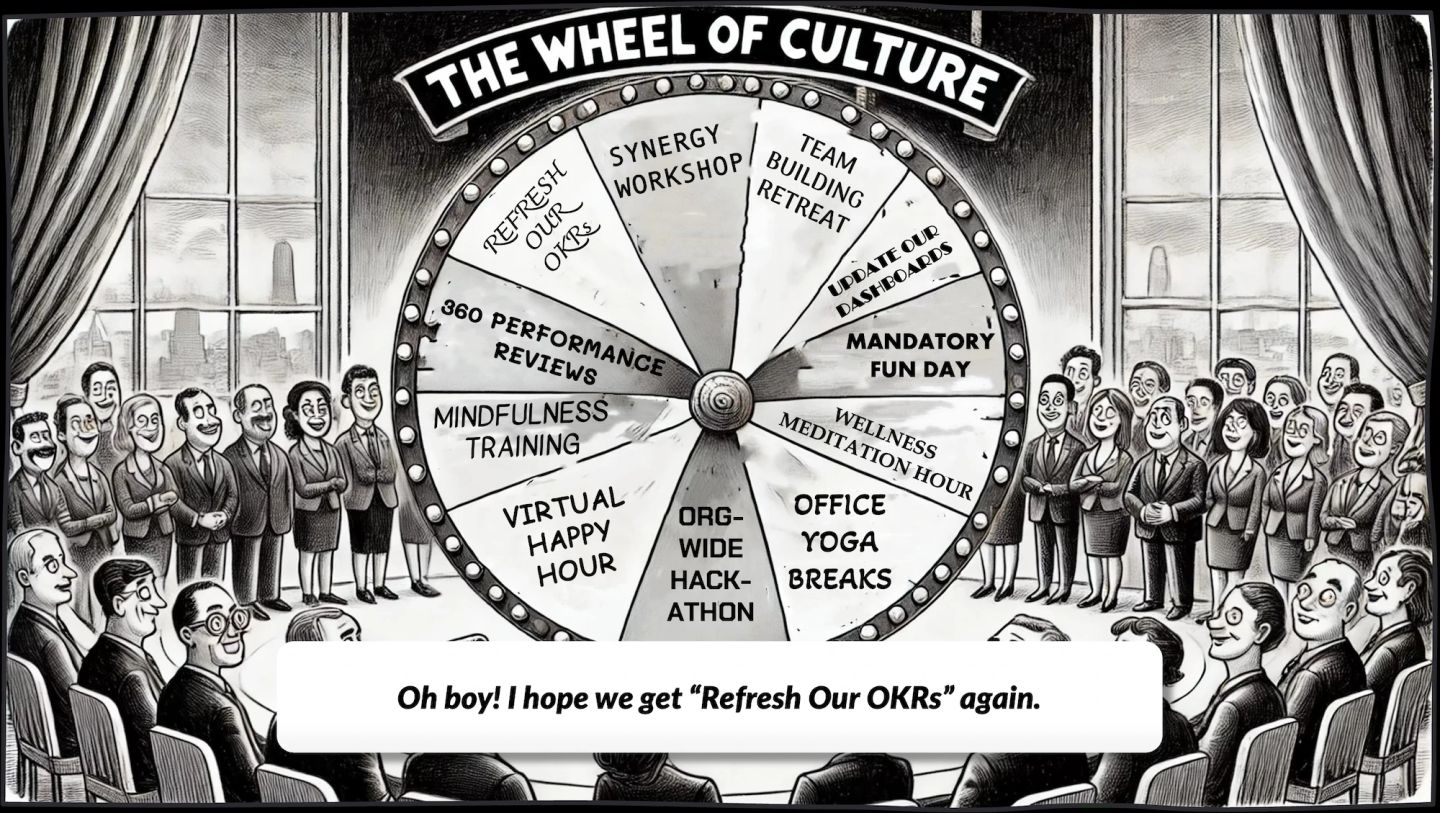
We were once sharing the science of performance with a large and old company. In preparation, they asked us to not introduce any new frameworks. They have been so drowning in bad, disconnected, legacy frameworks that they felt like they could not absorb new thinking! Imagine a team of scientists seeking to improve their predictive models of the world saying, "no new frameworks!" We wouldn't have the theory of relativity or quantum dynamics.
This is a problem that has to be resolved to help your companies survive the decade. Below are the twelve most elegant, up-to-date accurate frameworks for organizational performance that exist today. Moreover, they are highly internally consistent, deductive, and predictive.
Use this article with your leadership team to self-assess where your company currently is for each framework. Moreover, we'll show you through this article how the Factor.AI platform helps organizations manage performance and motivation the right way.
① Performance
Organizations are obviously keen to improve their performance. This goal results in constant reorganizations, restructurings, and operating model changes. But so often these transformations miss the mark. The most common reason is a lack of a shared understanding of performance.
What most organizations don't quite see is that there are two equally critical, yet mutually opposing types of performance.
The first is tactical performance. It is what causes convergence and scale in an organization.
The second is adaptive performance. It is what causes divergence and problem-solving in an organization.
An organization with neither tends to be purely reactive, putting out one fire after the other.
An organization with too much tactical performance can achieve scale and momentum, but is very difficult to change.
An organization with too much adaptive performance can iterate and achieve local optimums. However, they feel fragmented, wasteful, and lacking in a global optima.
An organization with both achieves their global optima. Every team is aligned, and there is little arbitrary uniqueness. But each team still has the ability to adapt to their local conditions as needed.

When organizations don't understand this framework, they often find themselves in a four-year cycle of reorgs, swinging the pendulum from the upper left quadrant to the lower right, and back-and-forth.
Learn more:
② The why, what, and how of tactical and adaptive performance
To accurately understand tactical and adaptive performance, it is critical to understand their why, what, and how.

The how of tactical performance is process—like a recipe that allows each chef in a restaurant kitchen to converge to the same approach for making a dish.
The how of adaptive performance is skill—like a master chef continuously tasting their own cooking to make adjustments when the real conditions don't fit the recipe's expected conditions.
The what of tactical performance is strategy. Strategy is what aligns a group of people effectively toward a common vision and goals.
The what of adaptive performance is habit. When a team's strategy isn't quite right, it figures out its path as it goes through problem-solving and feedback habits.
The why for both is motivation. Why we work determines how we work, and proper motivation ensures that colleagues perform tactically and adaptively.
The Factor.AI platform is a single work operating system where every team in your organization can effectively manage all five of the drivers of performance.
③ Motivation
Motivation isn't a scalar property. It is a vector property - it has both magnitude and direction. Or put differently there are good and bad forms of motivation.

The direction of motivation is a function of a person's motives, i.e., their reason for doing something.
First, the direct motives, which maximize both tactical and adaptive performance.
- Play - When you do an activity because you enjoy the activity, often due to novelty, creativity, or experimentation.
- Purpose - When you do an activity because you value its outcomes, or in other words, you personally feel valued.
- Potential - When you do an activity because it has a long-term outcome that matters to you.
Second, the indirect motives, which could drive tactical performance, but also invariably destroy adaptive performance.
- Emotional pressure - When you do an activity because you're solving for what other people think about you, like shame, guilt, peer pressure, and other forms of manipulation.
- Economic pressure - When you do an activity because you're chasing a reward or avoiding a punishment.
- Inertia - When you no longer know why you're doing what you're doing. You're in a rut.
You can use the Factor.AI platform to measure your team's motivation and start managing it effectively.
Learn more:
④ Distraction, cancellation, and cobra effects
The reason why the presence of indirect motives and the absence of direct motives causes adaptability to suffer is split attention.
- First comes the distraction effect, also known as stage fright, writer's block, and choking under pressure. This comes from indirect motives distracting you from the work.
- Second comes the cancellation effect. This check-the-box behavior is when people only focus on alleviating their pressure.
- Third comes the cobra effect. This is when people seek the shortest path to alleviate their pressure even if that path was against the intent of their pressure in the first place.

Learn more:
⑤ Strategy and work preferences
Modern adaptive organizations that seek to balance tactical and adaptive performance, must think of strategy differently.
Command-and-control organizations think of strategy as marching orders from the top.
Fragmented organizations either only set goals, or offer very little strategic guidance.
However, modern organizations recognize that the process of forming shared strategy and collective action has four steps.

Often, the first step is visioning, which entails sharing a common destination and figuring out the next problems to solve (for every person and team). This work is inherently collective (since we must share a vision) and creative (because the work is quite messy with lots of waste and little clarity).
The second step is exploring, which entails finding ideas to help solve those identified problems. Like Archimedes bathtub "eureka moment," ideation is often an individual exercise. Because many ideas will die on the vine, this work is also creation-oriented.
The third step is galvanizing. Galvanizing is about setting up your people for success. Based on the best ideas, it's about making sure that work is organized optimally. Again it is collective since it is about groups of people teaming, but it is now execution-oriented.
And the last step is achieving. Achieving is about getting the deliverables done, no matter what. This work is back to being individual and execution-oriented.
Many organizations shortcut steps and often have downstream performance problems as a result.
What's also exceptional about this framework is that it doubles as a "play profile". Typically employees have a strong preference for a given quadrant.
For example, those who prefer individual work tend to thrive more in remote work settings. Those who prefer collective work, tend to prefer the team-based actions. Moreover, some colleagues tend to prefer the creative work even though it is messy and wasteful. And some prefer the execution-oriented work even though it tends to move fast.
When you see a team's play profiles, you can predict which types of work they will do well without much support, and which types will require more coaching and support.
The Factor platform shows you each colleague's play profile so you can make role assignment and coaching choices more effectively. Moreover, when Factor's AI coaches you and your colleagues, it intelligently takes your play profiles into account to help keep you working at peak motivation.
Moreover, Factor's AI-powered Strategy Checks is the easiest and most effective way to get a whole organization to effectively follow all four steps.
Learn more:
⑥ Habits
The same four steps for strategy, need to occur habitually at the team level to build a self-correcting organization. Teams should continuously aspire to improve their practice of these habits:

- Inspiring vision, strategy & goals - Aligning the team through a shared vision and prioritized challenges, versus focusing solely on tasks.
- Open & transparent problem solving - Addressing issues openly and collaboratively, versus through slow, private discussions.
- Customer & market-centric feedback - Studying customers and competitors deeply, versus assuming you already know the market's needs.
- Continuous ideation & experimentation - Generating and testing ideas daily, versus relying on infrequent, large-scale projects.
- Well-crafted roles, processes, & meetings - Structuring teams for clarity and efficiency, versus allowing disorganization to cause stress and waste.
- Team norms & belonging - Building a cohesive team with a strong sense of belonging, versus being overly task-focused and neglecting team dynamics.
- Dependable planning & task execution - Executing plans reliably and flexibly, versus losing track of commitments or rigidly following tasks.
- Skill-based apprenticeship - Developing skills through on-the-job practice, versus relying on retrospective, less actionable feedback.
Leadership is harder than ever, and every leader has their own biases, preferences, and blindspots. Teams should take stock of these habits together (through quarterly Culture Checks in Factor) to make sure they are operating as effectively as possible.
Learn more:
⑦ Process
Process is really about keeping people tightly organized, avoiding arbitrary uniqueness, preventing reinventing the wheel, and allowing colleagues to focus their brain power where it is really needed (the adaptive work).
First, every process in an organization should be "process managed." This implies:
- Visible work management
- Transparency
- Process owners
- Easy continuous improvement
Second, every team should be intentional about how it organizes its work:

Process-based work implies that the team is tracking a continuous flow of work through process steps. In the Factor platform, you can use kanban-based work management for this approach.
Project-based work, on the other hand, is working backward from some goal that doesn't have to be done again. In the Factor platform, you can use gantt-based work management for this approach.
Playbook-based work is like having projects that have to happen over and over again, and thus require continuous improvement. Creating a stack in the Factor for each playbook, is an effective way to manage this approach. Whenever you need to use the playbook, you need only duplicate that stack.
Problem-based work is when a team is solving problems. Effective problem solving requires teams to appreciate the problem together, share context, collect ideas, and drive toward decisions. In Factor, create a stack for each problem, and use cards to capture all ideas. Then you can use both AI and your own content to help solve each problem with less friction and better solutions.
Learn more:
⑧ Skill - Apprenticeship
Apprenticeship cultures are the most sought after by Millennials and Gen Z. Yet few organizations build them. Most organizations mistake forced-feedback models with apprenticeship to their detriment. In most ways, apprenticeship is the exact opposite:

Learn more:
⑨ Skill sets of high-performing organizations
Apprenticeship at scale allows an organization to ...
- fully leverage their people.
- build expert tracks and ensure that only people who want to learn leadership become people leaders.
- attract and retain top talent.
To do this well, organizations need a skill taxonomy that disentangles complex behaviors (like problem solving) into learnable and coachable skills.
The following is the best framework of skills we've encountered to date:

⑩ Roles
Role frameworks like RACI, built in the 1950s, solved for establishing command-and-control hierarchies. However, today, the model does not make much sense.
First, knowing a priori who is responsible for each topic is impractical and incorrect in today's environment. Decision makers are not best determined by the topic, but by the potential idea or solution for a given problem.
Second, roles, organization, and talent are constantly shifting. Keeping up with those changes in an a priori decision matrix would also be impractical.
Lastly, these models tend to fly in the face of good teamwork and coaching.
Instead, use the workFORCE model to continuously adjust roles for every problem, project, process, or playbook.

- Followers (versus informed in RACI). In modern work operating systems and strategy software, people should keep themselves informed rather than relying on owners to do it for them. Hence, "follower" is a more apt term. Moreover, in an inclusive work environment, anyone should be allowed to follow what they want.
- Owners (versus responsible in RACI). The term owners is a more motivating prime for what the role entails and requires - ownership. Moreover, in modern work, often multiple owners are required (e.g., technical, design, and product owners when building a feature).
- Reviewers. In modern knowledge work, often a quality controller is required. For example, this could be an editor for written content, lawyers for contracts, or QA engineers for software.
- Coaches (versus accountable in RACI). This term is also a more motivating description of what the role entails. Good coaches, for example for a sports team, may not be on the field (like the owners) but are equally responsible for the team winning or losing (and sometimes more so).
- Experts (versus consulted in RACI). Consulted is a passive role, implying that the person responsible must consult with someone else. In modern work, instead organizations need to have experts that are part of cross-functional teams. They have to participate deeply, and not just wait to be consulted in case the team has blind spots.
Learn more:
⑪ Collaborative Problem Solving
In many organizations, collaborative problem solving is dysfunctional. Moreover, the more silos or expertises are involved, the more dysfunctional it becomes.
At the root is when organizations do not have a common approach to problem solving. Organizations should aim to master the five-step problem solving process:

- Appreciate the problem - all participants should feel like they understand the problem being solved, including the context and constraints. Use Factor Stacks to represent complex problems.
- Brainstorm ideas - before jumping to conclusions, get all the ideas on the table. The more ideas, the better. In Factor, add cards to your problem stack to capture every idea.
- Consider the ideas - make sure everyone understands all the presented ideas, and filter them for feasibility.
- Decide - Use problem-solving techniques (consensus, experimentation, analysis) to decide on the ideas to pursue.
- Explain - Share with all future participants the rationale for the choice. Do this as posts in the Factor stack and cards.
Learn more:
⑫ Transformational Change
Lastly, when you put these pieces together, you will see how to best manage transformational change. In the foreseeable future, driven by societal, technological, political, and environmental change, companies will be in a continuous state of transformation.

Transformation change, unlike tactical change, requires significant adaptability. In transformations, organizations have to get out of ruts. Statistically, most transformations fail, because to get out of a rut, all the drivers of performance, plus simplifying tools, must be leveraged.
The Factor platform has AI tools to help your organization manage all of these drivers incredibly effectively. If you find yourself in a state of transformation, reach out to us, and we can share more on how to transform well.
Learn more:
Next steps
Given the state of the art of what we know about human performance and motivation, we can create a golden age of work. However, around the world, many organizations are heading in the opposite direction. Worker engagement is low. Trust in institutions and brands is plummeting. Many iconic organizations are failing to adapt.
It doesn't have to be this way. We (Lindsay and Neel) have committed our adult lives to solving this problem and helping us create a world where everyone can love their work and thrive in their careers.
Get started with your organization right now. Here are four simple ways to take ground:
- Start by using this article with your team and conduct a step-by-step diagnostic. For each framework ask your team where are we strong and where are we weak.
- Reach out to us, and we'll conduct a 30-minute diagnostic and demonstration call to help you self-diagnose, and show you how these problems are now easily solvable. You'll be blown away by how effectively AI can be used to build great strategies, motivate teams, and create problem-solving cultures.
- Hear us talk through these frameworks and how they were formed, keep an eye open for our next free webinar.
- Read the New York Times bestseller, Primed to Perform. It will help you master these concepts.
- Sign up for our research brief. Roughly once every few weeks, we'll share cutting-edge research on work, motivation, and AI at work.
About the authors
Lindsay McGregor
Meet Lindsay McGregor, the best-selling co-author of Primed to Perform, and co-founder of Factor.ai and Vega Factor. She's on a mission to build organizations that are AI Native & People First, because, let's be honest, who wouldn't want a world where every company thrives and everyone genuinely loves their career?
Lindsay is a hardworking nerd at heart. She holds an MBA from Harvard Business School and an undergraduate degree from Princeton University. A former McKinsey & Company consultant, she's also a New York City Library cardholder and a science fiction enthusiast.
Today, Lindsay isn't just talking about change; she's making the tools and doing the science needed to ensure everybody has great professional lives. It's safe to say, she's making work work better for everyone.
Neel Doshi
Meet Neel Doshi, the best-selling co-author of Primed to Perform, and co-founder of Factor.ai and Vega Factor. He's dedicated his career to a pretty ambitious goal: creating a future where all companies are high-performing because they're AI Native & People First. Think of it as making work so good, people actually look forward to Mondays.
Neel looks at this challenge through the eyes of an engineer. He earned his engineering degree from MIT and his MBA from the Wharton School. A former Partner at McKinsey & Company, he's also a Kentucky Colonel and a graduate of the Bronx High School of Science. Neel takes science-nerd to all new heights.
Currently, Neel is focused on showing the world that through science and AI, every team and company can be extremely motivating and high-performing. No one need be left behind in the march of progress.
Learn more
- There are two types of performance - but most organizations only focus on one
- How company culture shapes employee motivation
- Why did Volkswagen cheat on their emissions testing?
- Growth should be playful, not painful
- Building high-performing teams with Culture Checks
- Disorganized work creates dysfunctional teams
- It's not your fault. Negative feedback is harmful (usually).
- Freedom from micromanagement and bureaucracy, in three lessons
- Kicking off a project? Six proven ways to unlock your team's creativity
- Why Agile goes awry - and how to fix it